The Federal Constitutional Court’s recent judgment has an impact far beyond the parties before it. It not only shapes what conduct the law recognises as harassment, […]
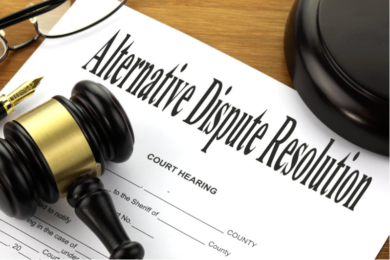
Mediation and the Future of Justice in Pakistan: Can a Dispute Be Resolved Before It Becomes a Case?
For many Pakistanis, seeking justice traditionally means entering a courtroom, engaging a lawyer, and embarking upon legal proceedings that may continue for years, sometimes decades. Disputes […]
Algorithmic Accountability and Faceless Tax Administration in Pakistan.
Abstract Pakistan’s tax management is shifting from manual analysis to algorithms. The Inland Revenue Information System (IRIS) of the Federal Board of Revenue (FBR), created by […]
Who Does the Law Serve? Power, Representation and Inequality in Pakistan
‘نیا قانون، نیا قانون کیا بک رہے ہو؟ قانون وہی ہے پرانا’- ‘What new law are you going on about? Law remains the same, old’. -Saadat […]
Anti-Dumping Measures: Is the statutory right of appeal to a Preliminary Determination under the Act sufficient?
The term ‘preliminary’ in anti-dumping investigations often belies its immediate and significant commercial consequences. Pakistan’s National Tariff Commission conducts these investigations under the Anti-Dumping Duties Act, […]
THE SAUDI CENTER FOR COMMERCIAL ARBITRATION: AN INSTITUTION OF GROWING REGIONAL RELEVANCE
By Taimur Malik and Maleeka Bokhari The growth of the Saudi Center for Commercial Arbitration (SCCA) over the past decade is part of a broader development […]
From Womb to Tomb — and Every Place in Between
Over the years, I have tried to understand violence against women. Not merely the violent act itself, but the thinking that makes the act possible. The […]
Re-Evaluating Criminal Responsibility under Pakistan’s Existing Anti-Honour Killing Law
Abstract Honour killings in Pakistan represent a persistent form of gender-based violence that existing legislation has failed to adequately address. This paper critically analyses the Criminal […]
The Evolving Landscape of Workplace Harassment in Pakistan
Workplace harassment as a concept embodies a pattern of persistent mistreatment based on gender and power. It is deeply intertwined with institutional culture and can function […]
The Age of Hyperlexis: Pakistan’s Legislative Proliferation
Pakistan’s governance crisis is habitually diagnosed as a failure of legislation. Every economic downturn, constitutional controversy, environmental catastrophe or institutional scandal appears to elicit the same […]

Nothing has happened to Judges; A Lot Has Happened to the Judiciary
A tribute to Justice (R) Shahid Karim, who silently retired on 19 August 2026 from the Lahore High Court. Karim J son of Fazal Karim J […]
The Right to Privacy Beyond Article 14: Can the Constitution of Pakistan Recognise an Unenumerated Fundamental Right?
Introduction: The Constitution of the Islamic Republic of Pakistan (‘Constitution’), 1973 contains an exhaustive catalogue of fundamental rights, however, it does not expressly enumerate a general, […]
One Definition, Two Wrongs: Disentangling Sexual Harassment from Gender Based Discrimination Under Pakistan’s Workplace Harassment Act
The Protection against Harassment of women at the Workplace Act, 2010 (hereinafter referred to as “Act”) is a landmark piece of legislation which protects persons (men, […]
UAE Introduces New Regulation on Commercial Fraud
The United Arab Emirates (the UAE) has rewritten its commercial fraud regulations for the first time since 2020. Cabinet Decision No. 107 of 2026 (the Resolution), […]
Protected by Law, Excluded by Society – Law, Power, False Consciousness and the Illusion of Inclusion in Pakistan
What good is a right that a person cannot realistically exercise? It is a question I have found myself returning to repeatedly, not because Pakistan lacks […]
Oman: 2026 Key Legal and Regulatory Developments
Part 1 – August 2026 Oman’s legislative and regulatory reform programme has gathered considerable momentum in 2026. The year has seen a series of significant laws […]
The Invisible Encumbrance: Nikahnama Entries and the Bona Fide Purchaser
Nikahnama, though a legal and contractual agreement, is seldom perceived as one. It is regarded as a sacred and intimate record of marriage, intended primarily for […]